The Svalbard islands in the Arctic Circle are a place of deep ecological and spiritual value
I read recently that ships are now increasingly taking the northern route through the Arctic from Asia to Europe. It seems to me an ominous development for our planet.
Climate change is taking place at an increasingly rapid rate. The Polar ice caps are melting. If the warming continues at such a pace, vast amounts of the pack ice are likely to disappear, raising sea levels, changing the geography of the world forever and destroying the fragile ecology of the polar regions.
Years ago, I visited the Svalbard Islands deep inside the Arctic Circle. It is a place where humans might find themselves on the edge of the habitable world, but it remains a pristine environment that is uniquely beautiful and worth preserving.
It is just after three o’clock in the morning and the sky overhead is a deep azure blue. The only shadows on the cold wet, ground are created by the heavy grey clouds that scud in from the freezing Greenland Sea. It’s midsummer and the temperature tonight is about 4°C. We have just flown in to Longyearbyen, the capital of the Svalbard islands, from the Norwegian mainland, and this is our first view of the midnight sun. After travelling through airports all day, I’m so tired I can hardly stand, and being surrounded by broad daylight in the middle of the night is, frankly, disorienting.
Our guest house is made of nondescript wooden planking and is marooned in a wide patch of dark mud and shale. It is surrounded by piles of chopped firewood, garbage bags and rusty snowmobiles and car parts. A pair of reindeer antlers hangs askew from the wooden railing of a nearby balcony. My travelling companion, Patrick, an aviation buff, points eagerly at the nearby peaks emerging from the cloud. ‘Did you know that an Aeroflot plane crashed into those mountains a few years ago? Everybody on board was killed.’
It is, as Lawrence Sterne might have said in an earlier era of travel, incontestably the most unpromising place I have ever arrived at in the middle of the night. We clamber up the wooden entrance stairs with our suitcases and are told by the night manager that someone is mistakenly occupying our room. ‘I’m sorry,’ she says, ‘but he seems to be drunk.’
hamilton wende
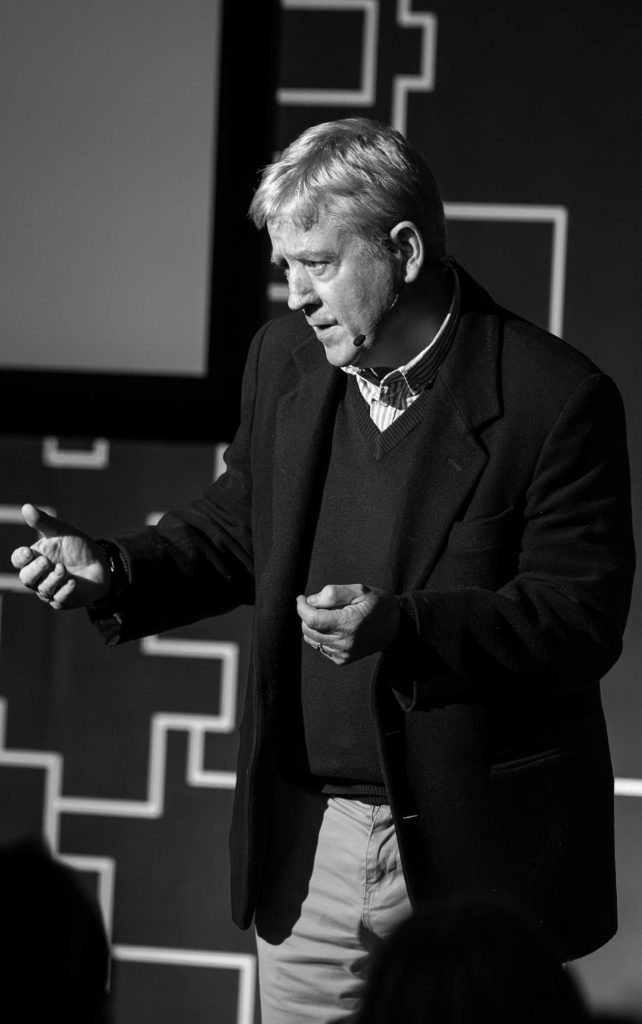
For leaders seeking a powerhouse speaker on high-stakes leadership, Hamilton Wende delivers unforgettable insights on navigating uncertainty and leading teams through crisis.
Based in Johannesburg, this veteran international journalist has spent forty years reporting from the front lines of 17 global conflicts for networks like CNN, the BBC, and National Geographic.
Hamilton translates his unparalleled battlefield experiences into actionable leadership strategies for the corporate world. A multi-year National Press Club Journalist of the Year and Gold Telly Award winner, he is a trusted advisor to multinational corporations, including Nedbank, Bosch, and Transnet, helping executives master crisis communication, narrative branding, and strategic resilience.
A prolific author of nine books and a top-tier keynote speaker, Hamilton blends gripping frontline storytelling with practical business wisdom, showing leaders exactly how to maintain focus, build trust, and drive results when under pressure.